A grower in Kenya with a full pickup of produce faces the same choice every harvest: sell where the truck stands, at the farm gate, haul it to the nearest open-air market, or hand it to an aggregator who buys in bulk and moves it on. Most advice stops at the price per kilogram quoted at each point. That number is the least useful figure in the whole decision, because it says nothing about what it costs the grower to reach it, how long the money takes to arrive, or how much of the load is unsellable by the time it gets there.
This is the question the Kenya Agri Atlas is built to answer at a national scale, and it defines the term precisely: farmgate value is the price a farmer receives at the gate of the farm, before any processing, transport, grading or trader margin is added. Everything the market or the aggregator adds on top of that gate price is exactly the cost the grower would otherwise have paid to reach them. The three channels are not really different prices for the same product. They are three different bundles of who pays the transport, who absorbs the loss, and who waits for the money.
One load, three doors
Picture the same sack of produce leaving the same farm on the same morning. At the farm gate, a buyer's vehicle is already parked at the boundary. The grower loses no fuel and no hours, but takes whatever price that single buyer names, because there is usually only one truck at the gate that day, not several bidding against each other. At the open-air market, the grower hires transport, pays a market fee, and stands beside the sack for however long it takes to sell, competing with every other seller who arrived that morning with the same crop. At the aggregator, the load usually still has to travel, often further than the nearest market, but it is bought in one transaction, in bulk, and the price is set before the truck is loaded rather than negotiated stall by stall. None of the sources in front of us give a Kenyan aggregator price to compare directly against a farm gate or market price for the same crop on the same day, and no honest article should invent one. What the record does give is a working method: price minus the cost of reaching that price equals what actually lands. That arithmetic is the same regardless of crop, and it is the frame this piece uses instead of a single ranked winner.
Narok wheat: proof that scarcity does not set the gate price, buyers do
The clearest evidence that farm gate price and farm gate scarcity can move in opposite directions comes from Narok, Kenya's wheat basket, which the World Bank's account of the region describes producing half the country's wheat output in an ordinary year across more than 2,000 farmers. In the drought season it covers, growers who had harvested 15 bags of wheat per acre the previous season brought in only three bags on average, a fall to a fifth of normal output.
If scarcity alone set the price, three bags instead of fifteen should have pushed the farm gate price up sharply. It moved from about Sh2,700 a bag to about Sh3,500, roughly 30 percent higher, nowhere near enough to offset the volume loss for the grower. The buying agent the World Bank quotes attributes the weak price response to a duty-free import waiver on wheat that took effect that July, alongside drought, wheat rust and unseasonal August rain. A grower doing the household budget that season had to weigh a much smaller harvest against a price that barely reflected the shortage, because imported wheat was sitting on the other side of the scale the whole time. The lesson for a channel choice made this season is not about wheat specifically. It is that the buyer at any of the three doors, farm gate, market or aggregator, is pricing against a wider market the grower cannot see from the farm, and open imports, oversupply elsewhere, or a slow buying season can flatten a price response to a bad harvest at any of them. A grower who assumes a short crop automatically means a strong price is making the same mistake the Narok data corrects.
What training buys, and what it does not
A bean value chain study run in Kamuli district, eastern Uganda, surveyed 127 farmers split between those who had received market training and those who had not, alongside 34 traders, five input dealers and 40 consumers. Trained farmers sold beans at USD 0.505 per kilogram against USD 0.369 for untrained farmers, a difference of roughly 37 percent on the same crop in the same district. The study on smallholder bean farmers and farm gate price also found something more useful than the price gap itself: farmers in that chain determine the quantity they sell, not the price, and most sell through middlemen because that channel is the one they can reach, not necessarily the one that pays best. That price gap is Ugandan bean data and it should stay Ugandan bean data. It should not be read as a Kenyan figure for any crop. What transfers is the mechanism, not the number: knowing your buyer's price relative to the wider chain, and being able to hold or move volume rather than sell whatever a single buyer offers that day, changed outcomes for these growers more than the crop or the season did. A Kenyan grower weighing farm gate against market against aggregator is really asking the same question in different clothes, whether the channel gives any room to negotiate at all or only a take-it price.
The Sh84 billion that never shows up in official figures
The Kenya Agri Atlas tracks agricultural income of KSh 774 billion for 2023/24 across 21 commodities in all 47 counties, built bottom-up from production volumes multiplied by farmgate prices. That sits about KSh 84 billion above the KNBS Economic Survey's marketed-production figure of KSh 690 billion for the same period. The Atlas attributes the gap to informal trade, subsistence consumption and unmeasured commodities, the exact space where open-air market sales and small-scale aggregator buying happen and never enter a government ledger. That gap matters for a channel decision because it is a rough size on how much of Kenya's farm income moves through channels nobody is counting closely. A farm gate sale to a known buyer, particularly one who issues any kind of receipt, sits closer to the formal side of that line. A cash sale in an open-air market or to a small aggregator without paperwork sits on the informal side. That is not a reason to avoid either channel. It is a reason to keep your own record of what you sold and for how much, because the state's own accounting admits it is missing tens of billions of shillings a year of exactly this kind of transaction, and nobody else is going to reconstruct your numbers for you later.
Why the compliance officer's file matters to your channel choice
Kenya's dairy pricing regulation gives a compliance officer the power to inspect records relating to a payout made by a purchaser, or the farm gate price paid to a primary producer, and to require the purchaser to supply more information on that payout or price. This particular clause sits in the dairy industry pricing regulation published by the state department for livestock, but the underlying pattern extends past dairy: any formal buyer, whether that is a processor, a licensed aggregator or a cooperative, generates a paper trail a regulator can pull. A farm gate cash sale or a stall transaction in an open-air market typically does not. This changes the choice for a grower who is also thinking about a loan application, an input subsidy, or any programme that asks for proof of sales. A channel with a receipt is auditable and that can work for the grower, not just against them, when a bank or a buyer of scale wants evidence of a track record. A grower who sells only for cash at the gate has a lighter compliance footprint but also a thinner file to show anyone later. Neither is wrong. It is worth deciding on purpose rather than by habit, because the paperwork difference between the three channels is often larger than the price difference.
Distance decides more of the margin than the buyer type does
A World Bank paper on aggregation and coordination problems in African input and output markets makes a point that is easy to miss because it is framed around milling rather than selling: the advantage of having many small mills spread through the country is that one sits within easy reach of almost every farmer. The World Bank's analysis of aggregation and coordination gaps is not describing farm gate buyers specifically, but the mechanism carries across: transport cost to any buyer is driven by how many buying points exist nearby, not by whether that point calls itself a farm gate buyer, a market or an aggregator. This is the arithmetic a grower can actually run without a single invented figure. Take the price quoted at each of the three doors. Subtract the transport cost for that specific route, which the grower already knows from previous trips or can ask a matatu or pickup operator for on the day. Subtract a market fee where one applies. Subtract an estimate of spoilage for however long the load sits unsold, which is close to zero at a farm gate collection and highest at an open-air market where produce can sit through a slow afternoon. What is left is the number that matters, and it will not match the headline price at any of the three doors. A crop grown in a district thick with buying points of any type will nearly always cost less to reach than the same crop grown where the nearest buyer, of any kind, is a long drive away, and that distance cost sits underneath every one of the three channel choices equally.
Where payment delay quietly changes the answer
None of the sources here give a Kenyan figure for how many days each channel takes to pay, and that gap should be stated rather than papered over with an invented number. What can be said is that the three channels differ structurally in how payment usually works, and a grower who is choosing between them should ask the specific buyer, not assume. A farm gate cash sale is typically settled on the spot. An open-air market sale is also usually cash, collected as the produce sells through the day. An aggregator buying in bulk, particularly one supplying a processor or an exporter further down the chain, is the channel most likely to run on a payment cycle rather than same-day cash, because that buyer is often waiting on their own downstream sale to clear first. A grower with a loan repayment due this week, or school fees due this term, has a reason to weight the immediate-cash channels more heavily even if the aggregator's quoted price is higher, because a higher price paid weeks late is worth less than the same price in hand today.
The counties with the most at stake
The Kenya Agri Atlas ranks counties by total farmgate value, with Nakuru leading at KSh 69.8 billion, followed by Meru at 45.6 billion, Narok at 32.7 billion, Kericho at 32.6 billion, Uasin Gishu at 32.5 billion and Nandi at 31.3 billion. By commodity, the Atlas lists farmgate values of KSh 93.9 billion for beef, 84.8 billion for dairy, 52.7 billion for goats, 40.6 billion for sheep, 31.1 billion for poultry and 21.5 billion for camel, alongside tea at KSh 218 billion, the single largest commodity by farmgate value in the country. Tea largely bypasses this whole three-channel question because it moves through factory collection rather than an open market, a reminder that the decision applies unevenly across crops. A dairy farmer, a beef farmer and a horticulture grower are each facing a different shape of this same choice, and a generic answer that ignores which commodity you grow is not worth much.
Building your own comparison instead of borrowing someone else's number
No source here gives a ranked answer for which of the three channels pays best in Kenya, and any article that claims one does is inventing it. What can be built, on your own farm, with your own figures, is the comparison below, filled in with your actual quoted prices, actual transport costs and actual waiting time for the crop and route in front of you this week.
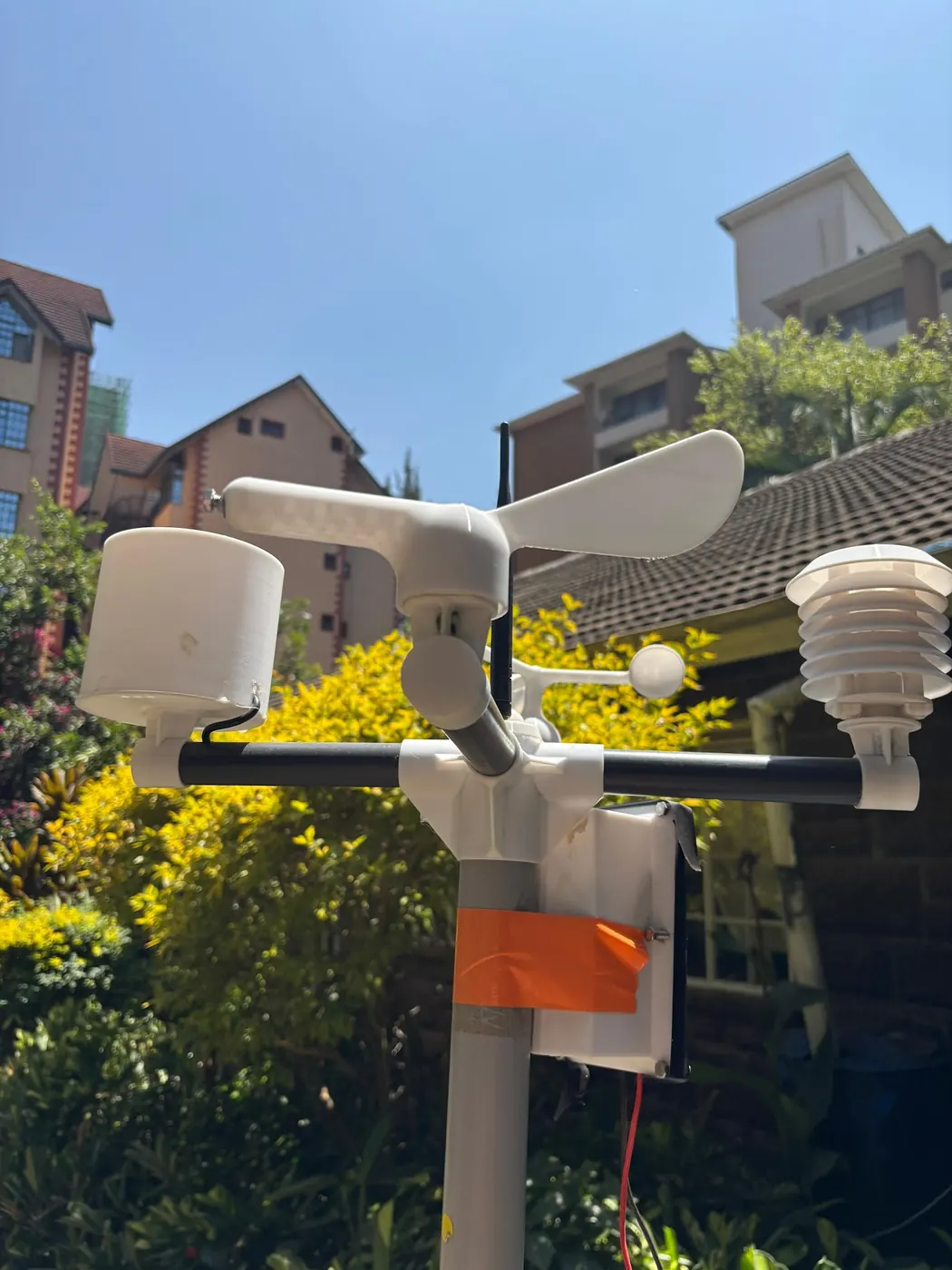
Tracking your own soil and weather conditions with something like IoT farm sensors will not change which door pays best on a given morning, but it does change the volume and timing decision that sits upstream of the sale, because a crop that reaches harvest on a predictable schedule gives you more choice of which buyer to approach rather than whichever one happens to be available when the crop can no longer wait. The same logic applies to water planning: a grower who has already worked through how much water maize needs at each growth stage is less likely to be forced into a distress sale at whichever price is on offer that day.
What this decision is not
It is not a question with one correct answer for every crop, every county and every season, and the sources behind this piece are consistent in refusing to supply one. The Uganda bean study shows a price gap driven by training and negotiating position, not by channel type. The Narok wheat case shows a gate price that barely moved despite a severe output collapse, because import policy mattered more than scarcity. The Kenya Agri Atlas shows tens of billions of shillings moving through channels the national accounts do not fully capture. None of that adds up to farm gate beating market, or aggregator beating either. It adds up to a decision that has to be worked out route by route, buyer by buyer, and season by season, with the grower's own numbers rather than a rule of thumb borrowed from a different country's bean chain. For a practical read on the sensor side of that planning, NuaSense's overview of IoT applications in Kenyan agriculture covers low-cost monitoring options that help a grower time a harvest rather than being forced by weather or pest pressure into selling on somebody else's schedule. Timing the harvest is the one part of this decision that is fully within the grower's control, even when the price at each of the three doors is not.