A grower walking a cabbage block after a wet week has one decision to make: spray now, wait, or scout again in three days. Most farms answer with a rule of thumb passed down from a neighbour or an agrovet counter. Pest thresholds Kenya growers can actually check against a number are rare, and that gap costs money in both directions: sprayed too early, sprayed too often, or sprayed too late once the population has already done its damage.
The idea of a threshold is not new outside Kenya. The EPA's IPM principles describe an action threshold as the point at which pest numbers or field conditions mean control has to happen, and the same guidance is blunt about the flip side: sighting a single pest does not mean control is needed. Not every insect on a leaf is a problem. Some are doing nothing at all, and a few are eating something worse than your crop.
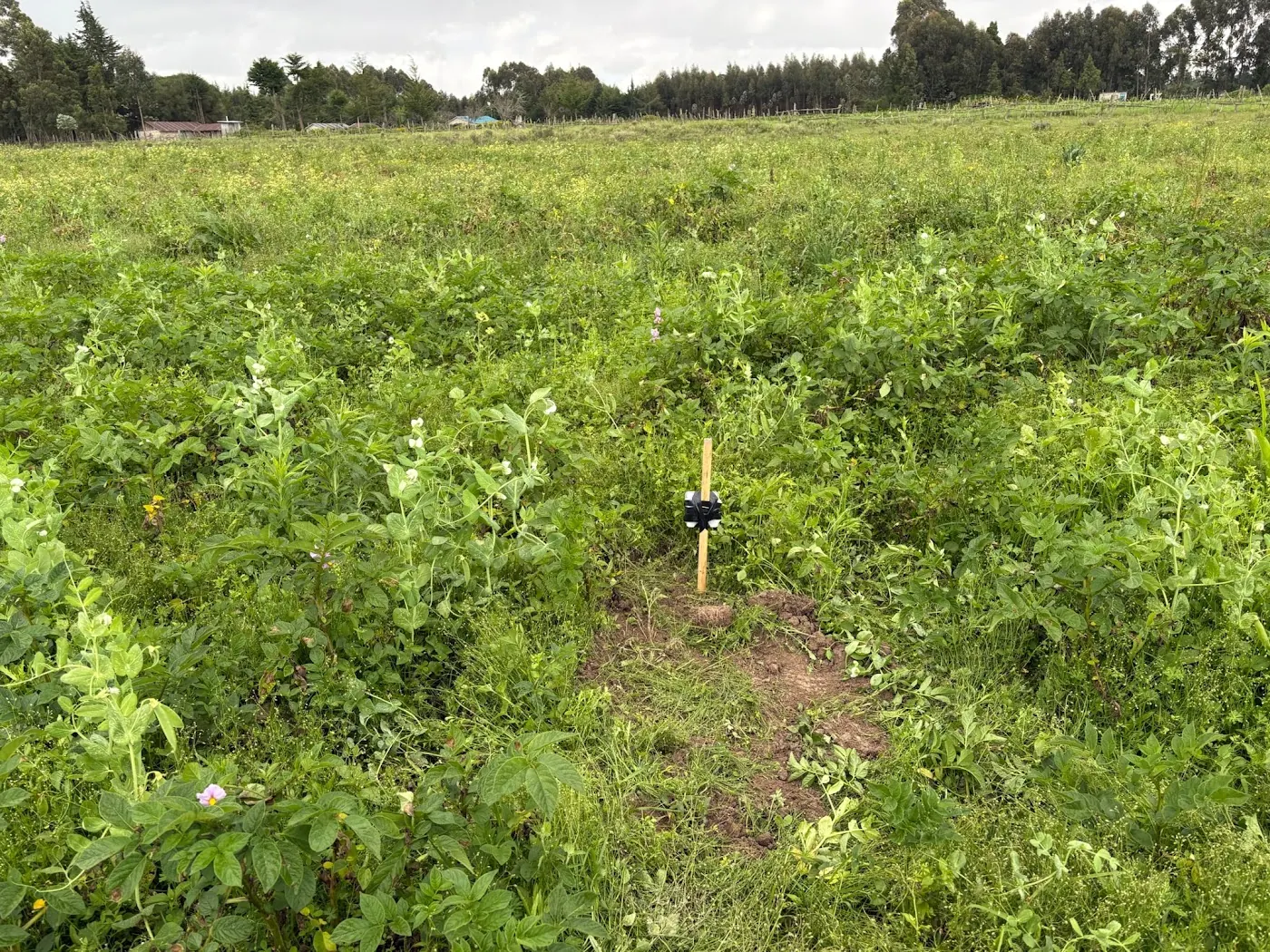
Measured by NuaSense weather stations and soil probes on Kenyan farms, over the period stated with each figure. Past readings, not a forecast.
Rain does not raise pressure evenly, it raises it in bursts
The claim that short rains automatically mean more pests is not one this piece will make. What the evidence supports is narrower and more useful: rain events trigger sudden jumps in specific pest populations, and a scouting schedule that ignores those jumps will always be a step behind. AgriLife Today's report on rain and crop pests describes cotton thrips blowing up quickly after substantial rain paired with cooler, overcast weather in Texas fields, while corn leafhopper populations that same year developed later and less severely than the year before. Two pests, same rain, opposite responses.
That is the pattern worth carrying into a Kenyan block during the short rains: rain does not push every pest in the same direction at the same speed. The Texas data does not tell a Kenyan grower which pest goes which way on maize or kale, because it was measured on cotton and corn in a different climate. What it tells you is that the week after a rain event is the week to walk the block, not the week to assume the spray schedule from last month still applies.
This is also where the region's own pest tracking matters. The CABI baseline survey on emerging pests in Eastern Africa names fall armyworm, papaya mealybug and desert locust as the emerging pressures across nine countries including Kenya, and puts a figure on what invasive species already cost: 0.9 to 1.1 billion US dollars a year in losses to smallholders across six Eastern African countries, roughly 1.8 to 2.2 percent of the subregion's agricultural GDP. That is a regional figure, and it should be read as a floor under why coordinated thresholds exist rather than a number to attach to any one farm.
What a real threshold looks like, written down
Vegetable growers in the United States have thresholds specific enough to check against a hand lens. The University of Maryland Extension's IPM threshold guide for vegetable crops sets these out per crop and per pest, not as a general feeling about pressure. Fresh market cabbage gets sprayed when more than 20 percent of plants are infested with caterpillar pests, or when the count reaches more than 0.5 larval units per plant for imported cabbageworm, loopers and diamondback moth combined. Broccoli, cauliflower and Brussels sprouts get a tighter number: more than one caterpillar per 25 plants. Aphids on cabbage trigger a spray at 2 percent of plants carrying five or more aphids per leaf. Brussels sprouts tolerate more aphid pressure, up to 15 percent infested, from transplanting until three weeks before harvest.
None of these numbers were measured on a Kenyan farm, and none should be copied onto one as if they were. Maryland's cabbage varieties, spray equipment, market tolerance for cosmetic damage and pest complex are all different from what a Kikuyu or Meru kale grower is working with. What transfers is the structure, not the figure: a named pest, a named plant part, a percentage or count per unit, and a crop stage the threshold applies within. A grower without a local number for diamondback moth on kale is not stuck. Walking a fixed number of plants, counting the actual pest, and comparing against whatever threshold an agrovet or extension officer can point to in writing still beats spraying on a fixed calendar.
The Maryland guide also states something worth repeating to anyone who thinks a threshold is a formality before the spray you were going to do anyway: the economic threshold is generally set at 80 percent of the economic injury level, the point where damage would start costing more than the spray. Built into the number is a margin, not a trigger the moment damage appears.
Why the same pest count means different things on different crops
A threshold is a fact about what happens to the crop and the market once the insect has done its work, not a fact about the insect itself. The UC IPM guidance on establishing treatment thresholds in floriculture makes this explicit: a threshold in cut flowers or potted plants is set almost entirely by economics, and the rule is to act once the revenue gained from better quality or yield exceeds the cost of spraying plus whatever damage the spray itself causes. For whiteflies early in a production cycle, that guidance puts a working number on it: more than about five adult whiteflies caught per week on a single well-maintained yellow sticky trap per 1,000 square feet warrants action.
The same source names two conditions that shift where a threshold sits, and both apply directly to Kenyan horticulture. Tolerance for a pest can be set higher if the infested plant part is never sold, which is exactly the case for lower leaves stripped before a flower stem goes to market. And thresholds can sit higher wherever a fast, reliable control method exists, because the grower has more room to wait and confirm the population is really building. A flower farm near Naivasha with a functioning cold chain and a quick-acting product available has more room to wait than a smallholder kale grower whose only spray option takes days to source.
A school pest management comparison is useful here for contrast, not adoption. Setting Action Thresholds from a Texas school IPM programme sets ant thresholds at 10 per classroom but only 5 per kitchen, purely because tolerance for the same pest changes with what the room is used for. A farm works on the same logic: a pest on a leaf destined for animal feed is tolerated at a level that would fail a leaf destined for the export pack house. The number moves with the market, not with the insect alone.
The decision: scout weekly, spray on the calendar, or wait for a warning system
Three real options sit in front of a Kenyan grower through the short rains, and each one has a cost and a payoff worth naming plainly rather than defaulting to whichever one a neighbour used last year.
- Scout on a fixed schedule and spray only against a written threshold. Costs labour: someone has to walk a set number of plants, count the actual pest, and record it, every week through the wet stretch. Buys fewer sprays overall, since most weeks stay below the line, and slows resistance building because the chemical is not applied on a schedule the insect can adapt to.
- Spray on a fixed calendar regardless of counts. Costs the most in product and labour over a season, and risks resistance building faster since the pest faces the same chemical on a predictable rhythm. Buys peace of mind and nothing measurable, since sprays land on weeks where the population was already below any threshold that would justify the cost.
- Wait for an early warning signal, then scout to confirm before spraying. Costs almost nothing extra if the signal already exists, since it replaces guesswork about when to start scouting rather than replacing scouting itself. Buys earlier detection of a pest surge tied to a specific trigger, provided the system covers your crop and location.
The third option is the one growers underuse, mostly because they have not heard of it. The CABI-led Pest Risk Information Service, PRISE, and the Fall Armyworm Monitoring and Early Warning System, FAMEWS, both operate as phone-based tools giving smallholders and commercial producers advance warning of pest outbreaks across Eastern Africa. Neither replaces scouting: a warning tells you when to look harder, not what you will find. A farm that ignores both tools is scouting blind on a fixed weekly schedule regardless of whether pressure is actually building, which is the same waste as calendar spraying, just with labour instead of chemical as the cost.
What a Kenyan scouting record should actually contain
None of the Maryland, UC or school thresholds above transfer as numbers to a Kenyan crop, and that gap is worth stating rather than papering over with an invented figure. What a grower can build, with an agrovet or a county extension officer, is a written threshold specific to the crop, the pest and the market outlet, following the same four elements every threshold above shares: a named pest, a countable unit, a percentage or count that triggers action, and the crop stage the number applies within. A threshold with no number attached is not a threshold, it is an opinion.
The record itself does not need to be complicated. A notebook with the date, the block, the pest counted, and the count against a set number of plants is enough to start building a farm-specific pattern over two or three seasons. Once a grower has that record, they can compare this season's counts against last season's at the same crop stage, which is a stronger signal than a single week's count on its own. This is the same discipline as tracking input timing through the short rains, where the physical sequence of seed, fertiliser and moisture matters more than any single date. Pest pressure follows the same logic: crop stage and the week's rainfall matter more than a fixed spray date.
Rain events are the trigger to walk the block, not the trigger to spray
The temptation after a heavy shower is to treat the rain itself as the threshold: it rained, so spray. That confuses the trigger for scouting with the trigger for action. The AgriLife data on cotton thrips shows the population jumping fast after rain, but the jump itself is what a scout needs to catch early, not proof that a spray was already overdue. A grower who scouts within a few days of a rain event and finds counts still below the written threshold has saved a spray. One who finds counts above it has caught the surge early enough for the spray to actually work, rather than chasing an established outbreak a week later.
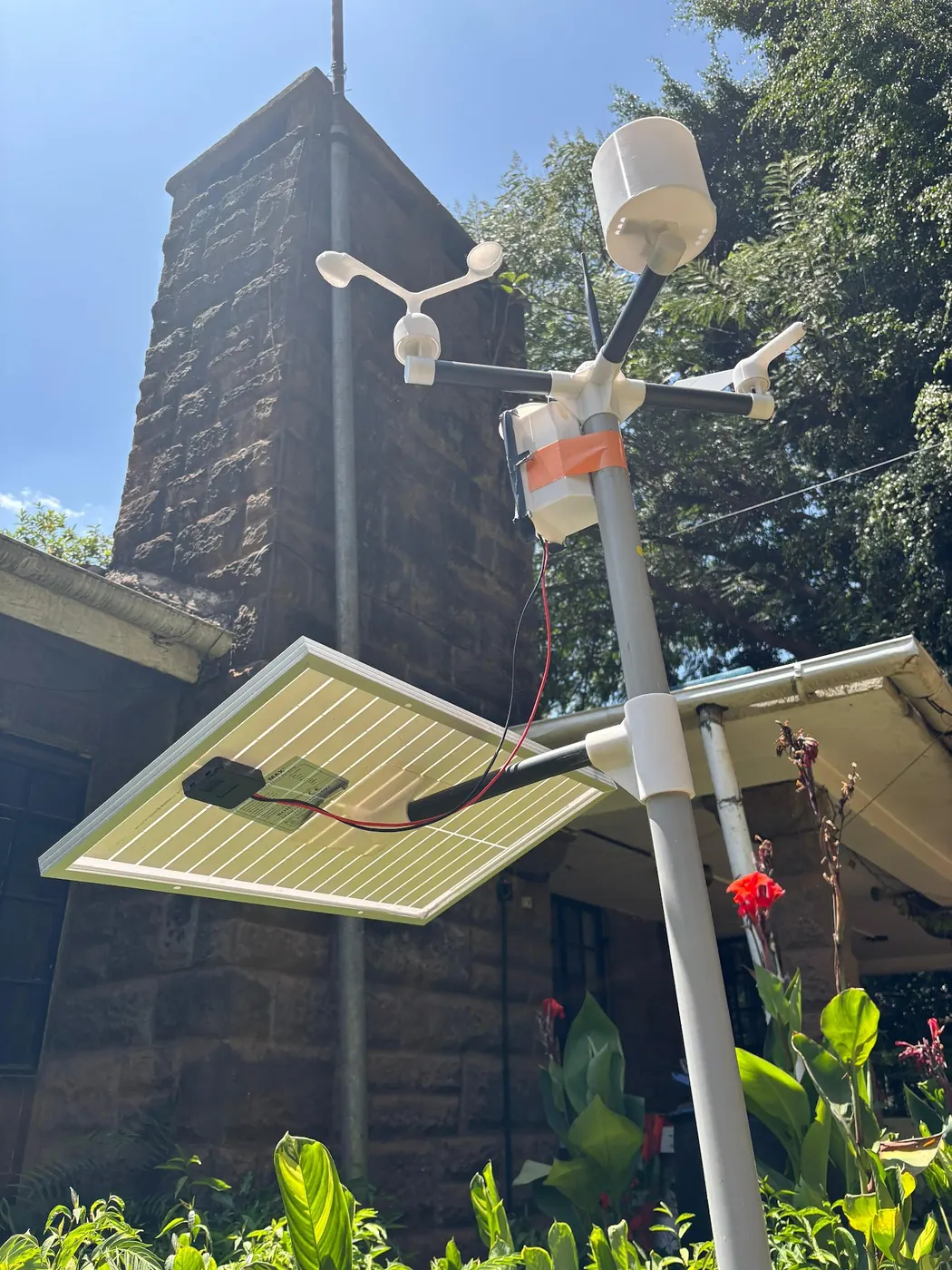
This is also where a weather record earns its keep beyond forecasting anything. A grower who can look back at rainfall and humidity readings from their own block over the preceding weeks has a much better basis for deciding how urgently to scout after a storm than one relying on memory. NuaSense's own network readings are not a forecast and never claim to be one: they are a record of what already happened, useful precisely because a scouting decision this week should be built on what conditions actually did, not on what anyone expects them to do next.
Resistance is the cost calendar spraying never shows you
The PMC review of integrated pest management's sustainability frames the whole threshold approach around one restriction: treatment should be restricted to situations that are economically and ecologically justifiable, using economic injury levels and action thresholds to decide, not a fixed interval. The ecological half of that sentence is easy to skip past, but it is the half that costs a farm money two or three seasons out. A pest sprayed on the same product every two weeks regardless of its actual numbers gets repeated, low-level exposure to that chemical, and repeated low-level exposure is exactly the condition that selects for resistant survivors.
Threshold spraying breaks that pattern by making applications irregular and tied to actual population pressure rather than a fixed rhythm the pest can adapt around. It is also the same logic behind cultural controls the same review names: crop rotation and other practices that prevent a pest problem from building before any threshold is even reached, alongside biological controls such as natural enemies and their conservation, augmentation or introduction. None of these replace scouting. They reduce how often a threshold gets crossed in the first place, which is the entire point of an integrated system rather than a single spray schedule.
Getting the application right once the threshold says spray
A correct threshold decision still fails if the spray itself is applied badly: wrong product for the pest identified, wrong time of day, wrong equipment calibration. NuaSense's safe spraying guide walks through identifying the pest, weed or disease correctly before reaching for a product, and choosing the right type of pesticide for what has actually been found. A grower who gets the threshold right and the application wrong has still wasted the spray.
Efficacy trials that back a product's claimed performance matter here too, and this is a place where regional guidance already exists. The EAC's guidelines for evaluating and reporting pesticide efficacy trials set out how a product's claimed effectiveness should be tested and reported across the East African Community. A product registered on the strength of a properly reported trial is a different proposition from one sold on an agrovet's word alone.
Where the World Bank's crop list changes the thresholds that matter
The World Bank's integrated pest management plan under the Sustainable Agricultural Intensification Project names 13 target crops for intensification, including maize, Irish potato, climbing bean and a set of vegetables: onion, tomato, sweet pepper and chilli. That list is a useful check for any grower wondering whether their crop already sits inside a programme with pest management guidance attached, since a crop named in a national intensification plan is more likely to have extension officers trained on its specific pest pressures than one outside it.
It also frames why threshold-based spraying is treated as policy, not just good practice, on these crops. A national intensification programme pushing farmers toward higher-input, higher-yield production on maize and vegetables raises the stakes on getting pest management right: more capital tied up means a wrong spray decision, in either direction, costs more. The vegetables on that list are also the crops where a written threshold like Maryland's aphid or caterpillar counts is easiest to adapt into a local record, because crop stages and market outlets are comparable even if the exact numbers are not.
What this decision costs against what it saves
Scouting labour is the real cost of threshold spraying, and it is worth being honest about it rather than pretending the method is free. Walking a fixed number of plants weekly, counting a specific pest, and writing the number down takes time a farm manager could spend elsewhere. Set against that is every spray avoided in weeks where counts sit below threshold, plus the slower resistance buildup that comes from irregular rather than scheduled applications, plus the earlier catch on weeks where an early warning tool flagged a surge before it was visible to the eye.
Calendar spraying looks cheaper in the moment because it requires no counting, but the CABI regional loss figures, 0.9 to 1.1 billion US dollars a year across Eastern Africa from invasive pests alone, are the scale of what an unmanaged pest problem costs when nobody was watching closely enough to catch it early. A written threshold does not eliminate that risk. It gives a grower a number to check against instead of a guess, which is the entire difference between crop protection and crop protection theatre.
Building your own threshold when nobody has written one for your crop
For most Kenyan vegetable and field crops, no local threshold table exists in the way Maryland has one. Saying so plainly is more useful than pretending a number can be borrowed. What a grower can do instead is start counting this season and treat it as year one of a multi-season record, using a county extension office or a trusted agrovet to help interpret what level of infestation is actually costing yield or market grade on that specific crop. A grower with two years of counts against the same crop, at the same stages, has a baseline stronger than any imported threshold could ever be for that block, soil and pest pressure. That record also interacts with rainfall: logging both pest counts and rain events from the same weeks starts to show which rain events actually precede a jump in a given pest on that land, rather than relying on a pattern measured on a different crop in a different country.
None of this requires expensive equipment. A notebook, a fixed sampling routine and the willingness to walk the block on a schedule beats waiting for a symptom already visible from the farm gate. Related reading on this site covers agricultural biotechnology as another lever on pest and disease pressure worth understanding alongside thresholds. The short rains will keep bringing irregular rain events every season, and the grower who has a threshold written down, even a rough first-season one, is the one making a decision instead of reacting to whichever pest happened to get noticed first.